The Color of Wood | Light Can Darken It, or Bleach It
This series · What the Eye Does, What the Mind Does · No. 6 (6 episodes total) Ongoing
"Some things stay invisible until you look at them apart."
- No. 1 The Eye Gets Fooled
- No. 2 There's No Way to Make It Match
- No. 3 Nobody Ever Stands in That Spot
- No. 4 How to Read Wood
- No. 5 Shrinkage | Wood Shrinks Differently by Grain Direction
- No. 6 The Color of Wood | Light Can Darken It, or Bleach It
Originally written in Korean and translated into English with the help of AI. Read the original
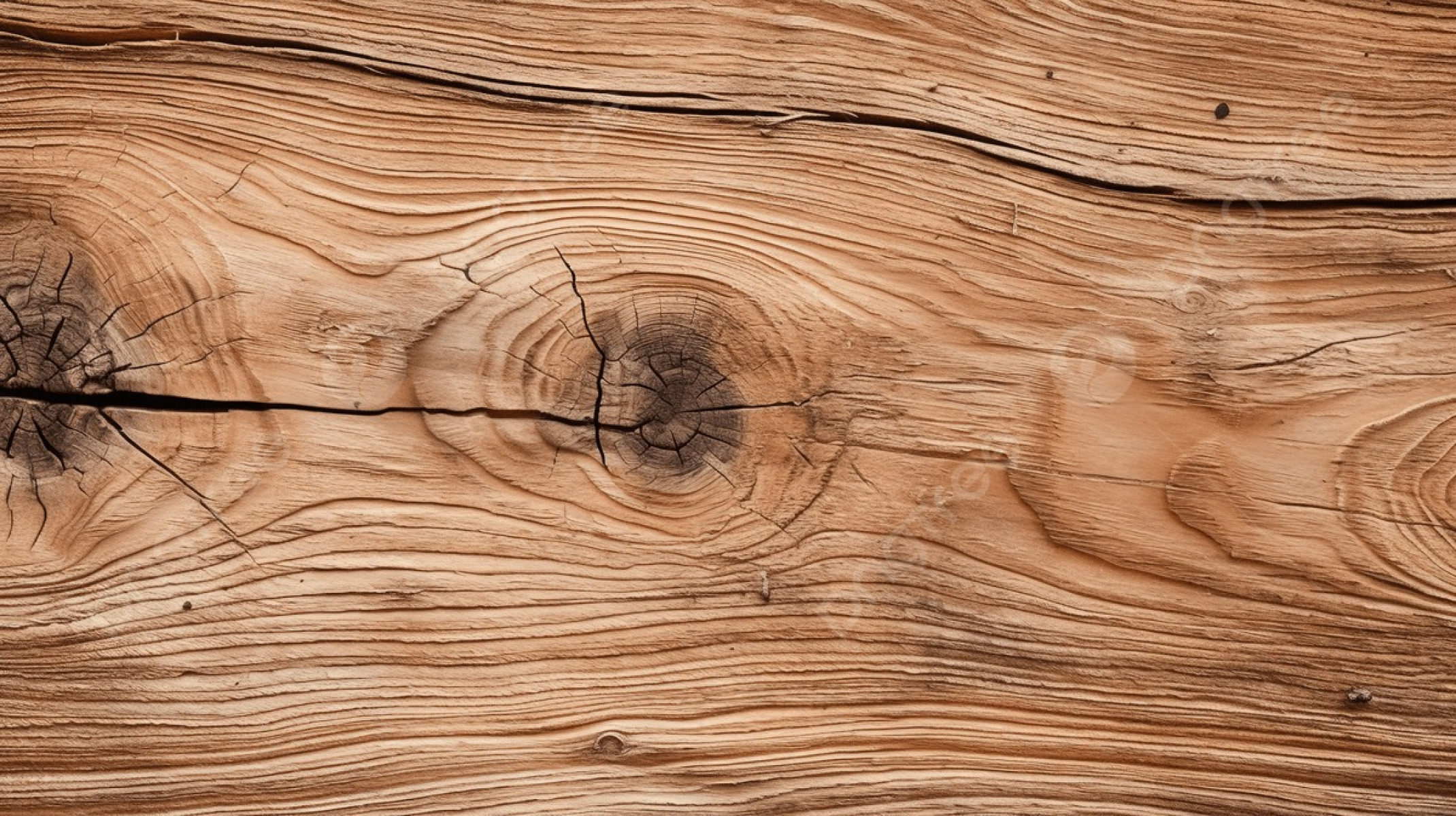
Freshly planed wood and wood that's been in use for years are different colors. Any carpenter knows this, but I'd rarely seen numbers for which species change how much, and in which direction. Leafing through a forestry textbook, I came across a table with exactly those numbers.
Trees Under 40 Hours of Sunlight
The forestry textbook Volume IV: Forest Products Production and Use, in its section "Wood Color-Matching Techniques," carries a table of 42 domestic and imported species exposed to sunlight for 40 hours. The source is cited as a 1992 wood engineering journal article. The color difference before and after exposure is given as a ΔE value: 2.5 or under is rated "weak," 2.5–6.5 "moderate," and above 6.5 "strong."
Forty hours is only about five or six days, even counting sunny days. In that short span, most species already came back "strong." Narrowed down to conifers alone:
| Species | ΔE | Rating |
| Japanese larch | 17.5 | strong |
| Korean red pine | 11.0 | strong |
| spruce | 9.3 | strong |
| fir | 8.9 | strong |
| hinoki cypress | 8.8 | strong |
| ginkgo | 7.9 | strong |
| sugi (Japanese cedar) | 7.4 | strong |
| pitch pine | 6.7 | strong |
| Korean pine | 5.6 | moderate |
| Norway spruce | 1.3 | weak |
Red pine changed nearly twice as much as Korean pine, and larch changed more than three times as much. The hardwoods ran even higher — bird cherry (Prunus padus) 34.6, chestnut 24.9, Chinese wingnut 24.2, flowering cherry 21.7. Alder, by contrast, barely moved, at 2.1.
Even within the same "strong" rating, the direction of change differs by species. The textbook sorts this into five patterns as well:
- Darkens: fir, spruce, larch, zelkova, Korean pine, Douglas-fir, maple, etc.
- Darkens, then quickly fades: mountain mulberry, some flowering cherry, rosewood, etc.
- Darkens, fades, then darkens again: sugi, hinoki cypress, paulownia, boxwood, cork tree
- Fades: some rosewood
- Fades, then quickly darkens: elm
The detail that sugi and hinoki darken, fade, and then darken again is the interesting part — the color doesn't just shift once and stop; it rises and falls.
Why It Changes
Wood's structure rests on three components — cellulose, hemicellulose, and lignin — with a small admixture of what are called extractives. Of these, lignin absorbs UV light the most readily. It functions something like a glue holding cell to cell.
Lignin that absorbs UV breaks down into small fragments, and in the process produces substances with a yellow or brown cast. That's why light-colored wood first turns yellow, then deepens toward brown. Extractives play a role too. The phenolic compounds that color heartwood can oxidize under light and darken, or break down and fade. Since extractives differ by species, so does the direction of change. Japanese research surveying tropical timbers found different quinone-type compounds involved in species that yellow versus species that fade.
Wood left outdoors goes a step further. Rain washes away the broken-down lignin, leaving bare cellulose behind white, and once mold settles onto that surface, the wood turns grey.
UV Darkens, Visible Light Lightens
Why the color rises and falls like this becomes clearer in Japanese research.
A 1986 report from the Hokkaido Forest Products Research Institute set wood samples at a south-facing window, a north-facing window, and a north wall that never received direct light, and tracked the color change. Wood at the windows darkened at first, then, as time went on, actually faded. Samples exposed to UV alone just kept darkening; the more UV was filtered out, the lighter the result. The report attributed this to visible light itself acting to lighten the wood.
A 2007 paper in the Journal of the Japan Wood Research Society exposed samples to narrow slices of the spectrum one at a time. Light-colored species darkened and deepened under UV, and lightened and faded under visible light. The wavelength marking the boundary between the two effects varied slightly by species.
Put together: two opposing forces act within sunlight. UV darkens the wood; visible light lightens it. Which one wins depends on the species and the light conditions, which is why some wood darkens and then fades.
A Canadian summary tells much the same story. Light-colored woods like conifers tend to darken at first and then move toward yellow or brown; darker, extractive-rich woods tend to fade at first and then move toward brown. Left outside for six months to a year, wood turns grey — and this, the summary notes, isn't sunlight's doing alone, but mold settling onto a surface already broken down by light.
It Changes Even Without Light
One more detail from the 1986 report stands out. Even wood on the north wall, with no direct light at all, kept changing color for over 100 days. There's similar research on our side. A 2009 paper in Mokjae Gonghak (Journal of the Korean Wood Science and Technology) examined sugi kept indoors for up to five years: brightness kept dropping through the fifth year, while color composition changed most sharply within the first year. It changed the same way outdoor wood does, just to a lesser degree.
In other words, even a door brought inside is never done changing color.
It Changes Only at the Surface
The same 2009 paper has another detail that's useful to a carpenter. Even in sugi kept indoors for five years, only the outermost two or three layers of cells had broken down. Light-driven color change happens only in an extremely thin surface layer. That's why planing an old door even once brings the original color straight back.
There are things besides light that change wood's color, but those work differently.
- Heat and air: kiln-drying green lumber at high temperature can turn the surface brown or yellow, as sugars and phenols inside the wood oxidize. Hardwoods show this at lower temperatures than conifers.
- Iron: tannin meeting iron ions turns black. That's what darkens the spot where a nail was driven into damp wood, or where a steel tool touched it. It rarely happens with dry wood and dry steel, and gets worse the more tannin a species has. The textbook notes that for Mongolian oak, as little as 0.8mg of iron per square meter is already visible to the eye.
- Mold: the blue-grey staining in pine sapwood (sap stain) is the classic case. The wood isn't rotted, but the color never comes back.
These kinds of discoloration often don't stop at the surface — they run deeper, so a single pass with a plane usually won't erase them.
A Note on Korean Pine
Going through these sources, Korean pine (jatnamu) caught my eye. It's written 紅松 in hanja and benimatsu in Japanese. The same textbook notes that North American western white pine is sold in Korea under the trade name "hongsong" (literally "red pine"), with window-and-door stock listed among its uses.
In the 40-hour test, Korean pine changed the least among conifers after Norway spruce. That doesn't mean it doesn't change — it's classified among the species that darken. The 1986 report looked at it separately: the sapwood is a bright white and the heartwood a dark yellow-brown, deepening toward the pith. Under UV exposure, though, the whole piece evens out to a uniform dark yellow-brown, and the color difference between sapwood and heartwood shrinks.
In other words, a board that's blotchy right off the saw settles, over time, into a single consistent color.
A Question Left Open
If UV darkens and visible light lightens, wood behind hanji paper and wood behind glass could age in different directions. Glass blocks a good share of UV, while hanji scatters light rather than filtering it by wavelength. The same slat, depending on what covers it, might settle into a different color after a few years. This, though, is a guess stitched together from two separate studies — I haven't yet found data that measured hanji and glass side by side.
Sources
- 「제Ⅳ권 임산물생산이용」, 제2장 6. 「목재의 조색기술」(공영토), 144~145쪽, 표 2-6-3 「주요 수종별 광변색」(자료: 목재공학회지, 1992).
- 梅原勝雄, 「ソ連材及び未利用国産材の光変色」, 『林産試験場月報』 No.415, 北海道立林産試験場, 1986. https://www.hro.or.jp/upload/12161/20979020001.pdf
- 山本健·片岡厚·古山安之·松浦力·木口実, 「木材の光変色に及ぼす照射波長の影響」, 『木材学会誌』 53(6): 320–326, 2007. https://doi.org/10.2488/jwrs.53.320
- 이광호·차미영·정우양·배현종·김윤수, 「실내 보관 삼나무재의 화학적·형태적 변화와 변색」, 『목재공학』 37(6): 566–577, 2009. https://koreascience.or.kr/article/JAKO200910103423167.page
- Philip D. Evans, "Weathering of Wood," Proceedings of the Canadian Wood Preservation Association 36th Annual Meeting, 2015, pp. 39–50. https://woodpreservation.ca/wp-content/uploads/2022/07/WEATHERING-OF-WOOD.pdf
You are free to quote and excerpt posts and records from the Workgroup Pyeongmok blog, as long as you credit the source (pyeongmok.com).
If you spot an error or have any thoughts on this post, please email us at .
Browse the pattern designs at Workgroup Pyeongmok
Go to the Collection